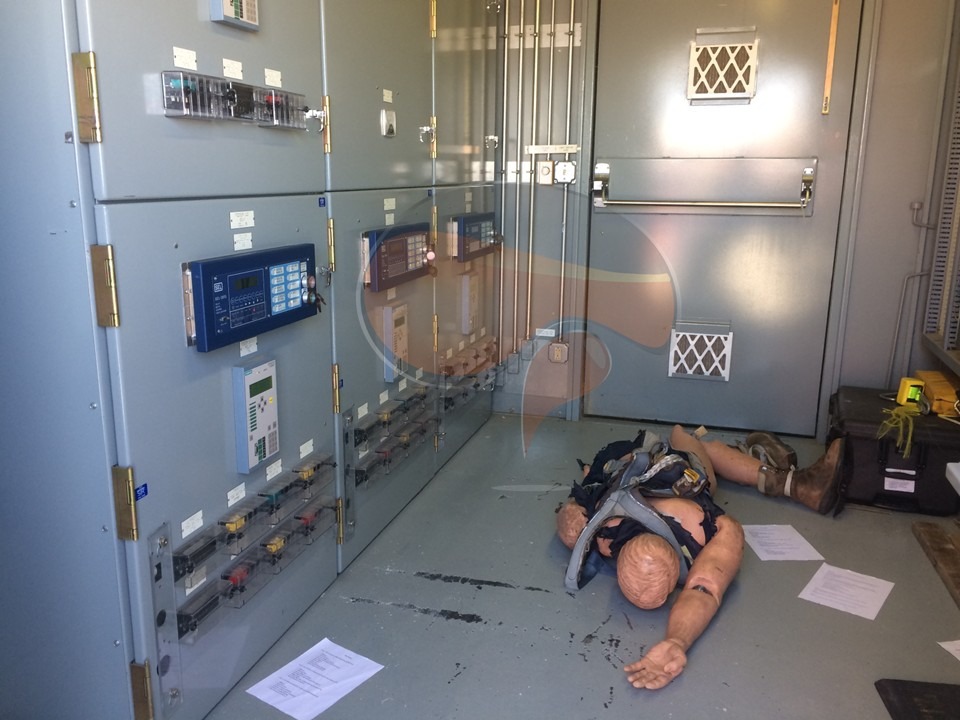
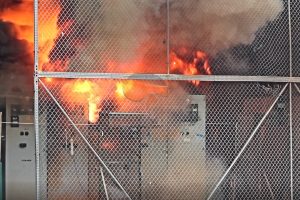
John: Have you seen Bill? Sue: I saw him this morning as he was headed to the work location. John: It’s almost the end of the shift, any word since this morning? Sue: No. I guess we better go check on him. John: Opening the electrical room door: OMG, BILL, NOOOOO!
Safety in electrical work has long emphasized preparation, training, and hazard control—but the next edition of NFPA 70E is expected to take a strong stance on staffing for emergencies. A new requirement will mandate the presence of an additional person during certain energized work tasks, reinforcing the idea that safety is not just about procedures, but also about having the right people in place when something goes wrong.
Doesn’t OSHA Address This?
OSHA addresses the need for a second person in 29 CFR 1910.269(l)(1)(i) which is for Electric Power Generation, Transmission and Distribution. The requirement is for at least two employees to be present during work such as:
The installation, removal, or repair of lines energized at more than 600 volts or the installation, removal or repair of equipment if there is exposure with parts energized at more than 600 volts. There are a few other requirements focusing on the 600-volt threshold as well as several exceptions.
2027 NFPA 70E
A new addition: 130.2(A)(2) – Additional Person significantly expands this concept.
Under this new requirement, when:
An energized electrical work permit (EEWP) is required, and
The task involves the use of shock and/or arc flash PPE
then:
At least one additional person must be present
This person must meet the emergency response training requirements outlined in Section 110.4(C)(1)
They must be positioned outside the greater of the limited approach boundary or the arc flash boundary
Importantly, this additional person is not there to perform the work, but to serve as an emergency responder if something goes wrong.
Additional Person Training Requirements
Section 110.4(C)(1) specifies that individuals responsible for emergency response must be trained in:
Contact release (safe methods to free a victim from electrical contact)
First aid
Emergency response procedures
Resuscitation (e.g., CPR)
This ensures that the second person is not just a bystander, but someone capable of taking immediate and effective action.
Practical Concerns
A common question arises: What if a company only has one qualified electrical worker?
NFPA 70E does not state that the second person needs to be a qualified electrical worker. Instead, their role is focused on emergency support—calling 911, initiating first aid, or assisting with rescue procedures. This makes the requirement more practical, especially for smaller organizations.
Why This Matters
Electrical incidents often escalate rapidly, and the first few minutes are critical. By requiring a second person trained in emergency response procedures to be present, the new requirement aims to:
Improve incident response time
Increase the likelihood of survival and recovery
Reinforce a culture of proactive safety planning
The upcoming addition also reflects a simple but powerful principle: when it comes to electrical safety, no one should work alone when the risks are high.
Emergency Response Plan
Don’t forget, 110.3(I)(1) Job Safety Planning requires having an emergency response plan as part of the job safety plan. A plan that would be useless if there is no one there to act should the worst possible emergency occur.
NFPA 70E Training Courses Available Through Brainfiller
Brainfiller offers several courses designed and taught by Jim, all targeted to engineers, electricians, and safety professionals.
Usamos cookies en nuestro sitio web para brindarle la experiencia más relevante recordando sus preferencias y visitas repetidas. Al hacer clic en "Aceptar", acepta el uso de TODAS las cookies.
Este sitio web utiliza cookies para mejorar su experiencia mientras navega por el sitio web. De estas, las cookies que se clasifican como necesarias se almacenan en su navegador, ya que son esenciales para el funcionamiento de las funcionalidades básicas del sitio web. También utilizamos cookies de terceros que nos ayudan a analizar y comprender cómo utiliza este sitio web. Estas cookies se almacenarán en su navegador solo con su consentimiento. También tiene la opción de optar por no recibir estas cookies. Pero la exclusión voluntaria de algunas de estas cookies puede afectar su experiencia de navegación.
Las cookies necesarias son absolutamente esenciales para que el sitio web funcione correctamente. Estas cookies garantizan funcionalidades básicas y características de seguridad del sitio web, de forma anónima.
Cookie
Duración
Descripción
cookielawinfo-checbox-analytics
11 meses
Esta cookie está configurada por el complemento GDPR Cookie Consent. La cookie se utiliza para almacenar el consentimiento del usuario para las cookies en la categoría "Analíticas".
casilla de verificación funcional de cookielawinfo
11 meses
La cookie está configurada por el consentimiento de cookies de GDPR para registrar el consentimiento del usuario para las cookies en la categoría "Funcional".
cookielawinfo-checkbox-otros
11 meses
Esta cookie está configurada por el complemento GDPR Cookie Consent. La cookie se utiliza para almacenar el consentimiento del usuario para las cookies en la categoría "Otros".
casilla de verificación necesaria para cookielawinfo
11 meses
Esta cookie está configurada por el complemento GDPR Cookie Consent. Las cookies se utilizan para almacenar el consentimiento del usuario para las cookies en la categoría "Necesarias".
casilla de verificación de rendimiento de cookielawinfo
11 meses
Esta cookie está configurada por el complemento GDPR Cookie Consent. La cookie se utiliza para almacenar el consentimiento del usuario para las cookies en la categoría "Rendimiento".
política de cookies vista
11 meses
La cookie está configurada por el complemento GDPR Cookie Consent y se utiliza para almacenar si el usuario ha dado su consentimiento o no para el uso de cookies. No almacena ningún dato personal.
Las cookies funcionales ayudan a realizar ciertas funcionalidades, como compartir el contenido del sitio web en plataformas de redes sociales, recopilar comentarios y otras características de terceros.
Las cookies de rendimiento se utilizan para comprender y analizar los índices de rendimiento clave del sitio web, lo que ayuda a brindar una mejor experiencia de usuario a los visitantes.
Las cookies analíticas se utilizan para comprender cómo interactúan los visitantes con el sitio web. Estas cookies ayudan a proporcionar información sobre métricas como el número de visitantes, la tasa de rebote, la fuente de tráfico, etc.
Las cookies publicitarias se utilizan para ofrecer a los visitantes anuncios y campañas de marketing relevantes. Estas cookies rastrean a los visitantes en los sitios web y recopilan información para ofrecer anuncios personalizados.
 Spanish
  English