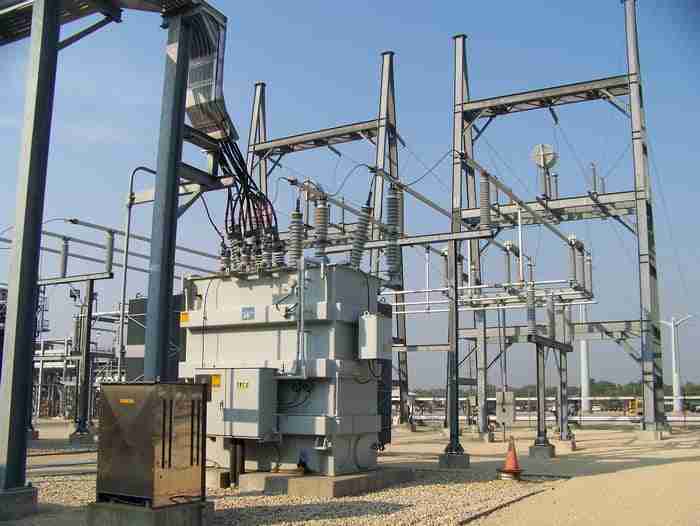
OSHA 1910.269 – Substation Entry Training

Current Status

Not Enrolled

Price

295.00

Get Started

5 Hours | 5 PDHs | 0.5 CEUs

$295 USD

OSHA 1910.269 Substation Entry Training

Ensure your team enters secured electrical areas safely, confidently, and in full compliance with OSHA requirements.

This comprehensive 5-hour on-demand course is built around OSHA’s official letter of interpretation mandating training for anyone entering substations or other restricted locations.

Based on Jim Phillips’ electric utility experience, he shows participants essential skills for proper substation entry, including federal regulations, minimum approach distances, required PPE, job briefing expectations, and step-by-step entrance procedures. Designed for engineers, technicians, meter readers, and operations personnel who may need to gather equipment nameplate data, read gauges or meters, perform staking, or conduct grounds maintenance, this program fulfills OSHA 1910.269 training requirements for substation entry.

Nota: This course focuses solely on safe entry and observation—it does not teach or qualify workers to perform tasks on energized electrical equipment.

$295.00    Individual Registration
$221.25     4 or more – Save 25%

For Large Groups or to hold this class at your location: Call or email: Director del programa | 800.874.8883 | +1.480.275.7451

What You Will Receive in This Class

  • 5 PDHs | 0.5 CEUs
  • 27 Video Modules
  • Comply with OSHA Substation Entry Requirements
  • Understand Entering a Substation Safely
  • Prueba final: se requiere una puntuación mínima de aprobación de 70% para obtener créditos de educación continua
  • Realice el cuestionario tantas veces como necesite
  • Certificado de finalización con créditos PDH/CEU
  • Sin límite de tiempo
  • Guarde este programa en su biblioteca personal para futuras referencias.
  • Esta clase está incluida para GRATIS con versión Livestreaming

Descuentos para grupos

Descuentos para grupos: ¿Necesita capacitar a su personal? Aproveche nuestros descuentos para capacitaciones grupales.

4 o más: Descuento 25% | 10 o más: Descuento 30% | Los grupos más grandes pueden calificar para ¡Mayores descuentos!

Llámanos para una propuesta.

Orden del día

5 Hours | 5 PDHs | 0.5 CEUs
  • INTRODUCCIÓN
  • REQUISITOS
    Carta de interpretación de OSHA
  • PELIGROS ELÉCTRICOS
    Descarga eléctrica, electrocución, arco eléctrico, quemaduras, explosión, luz ultravioleta, energía incidente y 1,2 calorías/cm2
  • CÓDIGOS, NORMAS Y REGLAMENTOS
    OSHA 29 CFR – Parte 1910.269, ANSI C2 – Código Nacional de Seguridad Eléctrica, IEEE Standard 1584™, Guía para el análisis de riesgos de arco eléctrico
  • OSHA 1910.269(d)
    Generación
  • OSHA 1910.269(n)
    Transmisión y distribución
  • REQUISITOS PARA TRABAJADORES CALIFICADOS DE OSHA
    Requisitos de capacitación, procedimientos de seguridad
  • TRABAJAR EN O CERCA DE PIEZAS EXPUESTAS ENERGIZADAS
    ¿Quién está calificado?, ¿Cuándo se requieren dos empleados?, Artículos conductores, Ropa
  • PERSONA CALIFICADA
    Capacitado, conocedor, entiende los peligros, identifica los peligros, distancia mínima de aproximación
  • DOS REQUISITOS PARA LOS EMPLEADOS
    ¿Cuándo se requieren dos empleados para la tarea?
  • ENTRADA A LA SUBESTACIÓN
    Requisitos para ingresar/trabajar en subestaciones, requisitos al llegar a la subestación, inspección visual/recorrido por el lugar, instrucciones de trabajo
  • EQUIPOS DE SUBESTACIÓN Y PELIGROS
    Transformador, Estructura, Disyuntor, Fusibles, Capacitores, Caseta de control, Relés de protección, Tablero de distribución, Transformador de corriente, Equipos de baja tensión, Sistemas de baterías, Sistemas de control y datos
  • PUESTA A TIERRA DE LA SUBESTACIÓN / RED
    Potencial de contacto y paso, rejilla de tierra, estera de tierra, puesta a tierra de cercas y portones
  • DISTANCIA MÍNIMA DE APROXIMACIÓN
    Definiciones y requisitos de OSHA y NESC, importancia de MAD, uso de tablas MAD
  • DETERMINAR EL VOLTAJE DE LA LÍNEA DE TRANSMISIÓN
    Aproximación basada en el número de aisladores
  • PELIGRO DE ARCO ELÉCTRICO
    Energía incidente, distancia de trabajo, límite de arco eléctrico
  • ANÁLISIS DE ENERGÍA INCIDENTAL
  • Determinación de la energía incidente (cal/cm2), significado de la información al seleccionar prácticas de trabajo seguras y EPP
  • EQUIPO DE PROTECCIÓN PERSONAL EPI
    Trajes contra arco eléctrico, protección facial, protección de manos, protección de pies, selección de clasificación de arco suficiente
  • MESAS DE ROPA NESC
    Tabla 410-1 Notas, Tabla 410-2 y 410-3 Selección de ropa para protección contra arco eléctrico
  • ETIQUETA DE ARCO ELÉCTRICO
    Interpretación de la información de las etiquetas: energía a distancia de trabajo, límites de arco eléctrico, requisitos de EPP
  • RECORRIDO VIRTUAL POR LA SUBESTACIÓN
Module 1 – Introduction

Why is Substation Entry Training Required?
What is OSHA Letter of Interpretation – LOI
OSHA LOI – Work within restricted areas
OSHA LOI – Training requirements
Substation Entry Minimum Requirements
50 Volt Threshold

Module 2 – Agenda

Electrical Hazards
Substation Ground Grid
Minimum Approach Distance
PPE Requirements
Etiquetas de advertencia de arco eléctrico
NESC Tables

Module 3 – Qualified Person

Qualified Person Definition
Requisitos de formación
Working on vs. Working Near
Electrical Safety – Historical Perspective
Voltage Levels

Module 4 – Electrical Hazards

Peligro de descarga eléctrica
Physiological Response to Current
Research – Electric Shock
Let-Go Threshold
Defibrillation
Current Path

Module 5 – Electrocution Hazard

Forensic Case – Electrocution
Investigation – Root Cause
Persona no calificada
Wrong Place – Wrong Time
Lapse in Judgement
Ground Grid (and Swimming Pool)

Module 6 – Arc Flash Hazard

What is an Arc Flash
Hazards associated with Arc Flash
Arc Flash Injuries
Video – Staged Arc Flash from Lab
Arc Flash Low vs. High Voltage
Burns, Blast, UV Light

Module 7 – Arc Flash Investigation

Forensic Case – Arc Flash
Investigation – Root Cause
LOTO Failure
Need for Complex LOTO
Burn Injury
1.2 cal/cm2

Module 8 – OSHA Overview

Need for Federal Safety Standards
Origin of OSHA
Employee/Employer Relationship
General Duty Clause
OSHA PPE Requirements
“Appropriate” PPE

Module 9 – Codes and Standards

Timeline of OSHA and NFPA 70E
Need for NFPA 70E
Typical PPE
OSHA 1910.269
NESC, IEEE
ASTM, ANSI

Module 10 – Definitions

Need for Common Terminology
Affected Employee
Contract/Host Employer
Designated Employee
Energized
Ground vs. Grounded

Module 11 – OSHA 1910.269

Introducción
Qualified Employee
Requisitos de formación
Resetting Tripped Circuit Breaker
Two Employees
Working on vs. near Energized Equipment

Module 12 – Substation Entry Requirements

OSHA 1910.269(u) Substations
Entrada a la subestación
Requirements
Report Presence
Job Briefing
Energized Substation Access

Module 13 – Substation Entry

Arrival at Substation
Job Briefing
Recognize and Avoid the Hazards
Extent of Briefing – Checklist
Overview – Substation Equipment
Identifying Major Substation Components

Module 14 – Substation Equipment and Hazards

Substation Bus
Transformadores
Disyuntores
Substation Structure
Equipment Grounding
Fuses – Expulsion vs. Current Limiting

Module 15 – Substation Control House

Pistol Grips
Protective Relays
Switchgear
Overview of Relay Operation
Relay Settings
Avoid “Accidental” Tripping

Module 16 Current Transformers

Current Transformer Basics
Do NOT Open Circuit the CT
Medium Voltage Circuit Breaker
Racking In/Out a Circuit Breaker
Discussion – Remote Operation
Peligro de arco eléctrico

Module 17 – Control House Low Voltage

Low Voltage Equipment
Límite de aproximación limitada
Límite de aproximación restringida
Límite de arco eléctrico
NFPA 70E Approach Boundaries – Table
Video – Accidental Contact
Catastrophic Failure – Vehicle

Module 18 – Substation Ground Grid

Overview of Ground Grid
Purpose of ground grid
Step Potential
Touch Potential
Fence and Structure Grounding
Ground Mat

Module 19 – Neutral Grounding Resistor

Purpose of Neutral Grounding Resistor
High Resistance Grounding
Puesta a tierra de baja resistencia
Downed Conductor
Voltage Gradient
Step Potential

Module 20 – Low Voltage Equipment

Overview
Electrical Safe Work Condition
Instrumentos de prueba
Testing for Absence of Voltage
1942 Voltage Testing Practices
Live-Dead-Live Testing

Module 21 – Minimum Approach Distance

MAD Overview
MAD Definition
OSHA MAD Tables
Live Work – Use of Helicopter
Identify Voltage from Insulators
Example Problem – MAD

Module 22 – Arc Flash Hazard

Arc Flash Hazard Overview
Arc Rated PPE
Energía incidente
Arc Rating
Arc Flash Label – PPE Selection
Límite de arco eléctrico

Module 23 – Unique Transformer Hazard

Transformer Secondary and Arc Flash
Long Arc Duration due to Primary Device
Unprotected Zone
Secondary Blind Spot
Investigation – Secondary Arc Flash
Investigation – PPE Performance

Module 24 – Arc Rated Clothing

Example of 8 vs 65 cal/cm2 Clothing
Face Shield AFTER and Arc Flash
Clothing Requirements and Restrictions
Laboratorio de pruebas de EPI
Arc Flash Hood Testing
PPE Categories

Module 25 – National Electrical Safety Code

NESC Overview
Use of NESC PPE Tables
PPE Selection: 50 – 1000 Volts
PPE Testing for NESC Tables
Fault Current, Voltage, Clearing Time
PPE Selection Example

Module 26 – Arc Flash Labeling

Requisitos de la NFPA 70E
Typical Arc Flash Label
What does Label Mean?
Label Colors and Signal Words
Labels with Large Incident energy
Example Label

Module 27 – Virtual Substation Tour

Meet with Person In Charge
Job Briefing
Visual Walk Around Inspection
Enter Substation – Non-Electrical Work
Avoid Energized Equipment
Contact Person in Charge Upon Leaving

¿Preguntas?

Si tiene preguntas, desea obtener información sobre la inscripción o desea analizar la posibilidad de realizar esta clase en su ubicación como un programa de capacitación en el sitio, comuníquese con nosotros.

Brainfiller, Inc. | Apartado Postal 12024 | Scottsdale, AZ 85267

Course Content

Module 1 – Introduction | Duration 8:46
Module 2 – Agenda | Duration 7:17
Module 3 – Qualified Person | Duration 7:40
Module 4 – Electrical Hazards | Duration 18:13
Module 5 – Electrocution Hazard | Duration 8:26
Module 6 – Arc Flash Hazard | Duration 12:21
Module 7 – Arc Flash Investigation | Duration 7:51
Module 8 – OSHA Overview | Duration 5:34
Module 9 – Codes and Standards | Duration 8:57
Module 10 – Definitions | Duration 17:13
Module 11 – OSHA 1910.269 | Duration 17:10
Module 12 – Substation Entry Requirements | Duration 5:50
Module 13 – Substation Entry | Duration 6: 05
Module 14 – Substation Equipment and Hazards | Duration 14:00
Module 15 – Substation Control House | Duration 14:34
Module 16 Current Transformers | Duration 5:29
Module 17 – Control House Low Voltage | Duration 11:39
Module 18 – Substation Ground Grid | Duration 11:39
Module 19 – Neutral Grounding Resistor | Duration 4:17
Module 20 – Low Voltage Equipment | 13:07
Module 21 – Minimum Approach Distance | Duration 13:15
Module 22 – Arc Flash Hazard | Duration 12:19
Module 23 – Unique Transformer Hazard | Duration: 4:09
Module 24 – Arc Rated Clothing | Duration 4:33
Module 25 – National Electrical Safety Code | Duration 6:40
Module 26 – Arc Flash Labeling | Duration 4:01
1 of 2