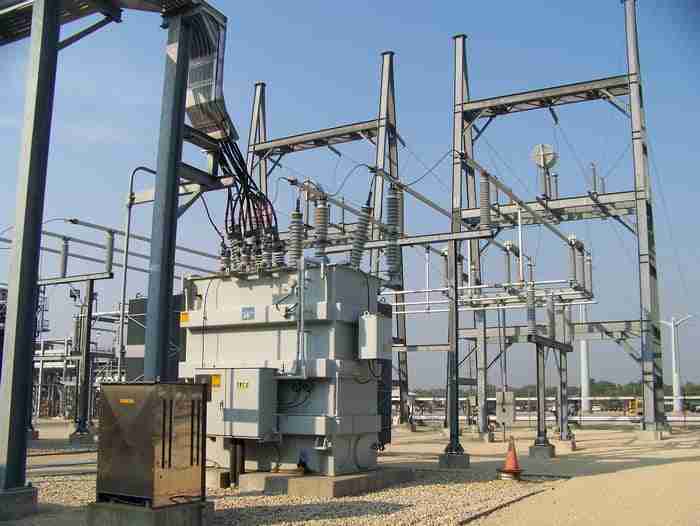
OSHA 1910.269 – Substation Entry Training

Current Status

Not Enrolled

Price

295.00

Get Started

5 PDHs | 0.5 CEUs | 27 Modules | $295.00  This class is for those that enter secured areas such as substations and require training as required by Federal Regulation: OSHA 1910.269.  This may include engineers, technicians, meter readers, and other personnel that enter a substation for tasks such as viewing electrical equipment, obtaining nameplate information, and similar functions. Other duties might included staking and grounds maintenance.


5 Hours | 5 PDHs | 0.5 CEUs

$295 USD

OSHA 1910.269 Substation Entry Training

Ensure your team enters secured electrical areas safely, confidently, and in full compliance with OSHA requirements.

This comprehensive 5-hour on-demand course is built around OSHA’s official letter of interpretation mandating training for anyone entering substations or other restricted locations.

Based on Jim Phillips’ electric utility experience, he shows participants essential skills for proper substation entry, including federal regulations, minimum approach distances, required PPE, job briefing expectations, and step-by-step entrance procedures. Designed for engineers, technicians, meter readers, and operations personnel who may need to gather equipment nameplate data, read gauges or meters, perform staking, or conduct grounds maintenance, this program fulfills OSHA 1910.269 training requirements for substation entry.

Note: This course focuses solely on safe entry and observation—it does not teach or qualify workers to perform tasks on energized electrical equipment.

$295.00    Individual Registration
$221.25     4 or more – Save 25%

For Large Groups or to hold this class at your location: Call or email: Program Director | 800.874.8883 | +1.480.275.7451

What You Will Receive in This Class

  • 5 PDHs | 0.5 CEUs
  • 27 Video Modules
  • Comply with OSHA Substation Entry Requirements
  • Understand Entering a Substation Safely
  • Final Quiz – Minimum Passing Score of 70% Required for Continuing Education Credit
  • Take the quiz as many times as you need
  • Certificate of Completion with PDH/CEU Credit
  • No Time Limit
  • Store this program in your personal library for future reference
  • This class is included for FREE with Livestreaming Version

Group Discounts

Group Discounts: Need to train your staff? Take advantage of our group training discounts.

4 or more: 25% discount | 10 or more: 30% discount | Larger Groups may qualify for Larger Discounts!

Call us for a proposal.

Agenda

5 Hours | 5 PDHs | 0.5 CEUs
  • INTRODUCTION
  • REQUIREMENTS
    OSHA Letter of Interpretation
  • ELECTRICAL HAZARDS
    Electric Shock, Electrocution, Arc Flash, Burn Injury, Blast, UV Light,  Incident Energy and 1.2 Calories/cm2
  • CODES, STANDARDS AND REGULATIONS
    OSHA 29 CFR – Part 1910.269, ANSI C2 – National Electrical Safety Code,  IEEE Standard 1584™, Guide for Arc Flash Hazard Analysis
  • OSHA 1910.269(d)
    Generation
  • OSHA 1910.269(n)
    Transmission and Distribution
  • OSHA QUALIFIED WORKER REQUIREMENTS
    Training Requirements, Safety Procedures
  • WORKING ON OR NEAR EXPOSED ENERGIZED PARTS
    Who is qualified, When are Two Employees Required, Conductive Articles, Clothing
  • QUALIFIED PERSON
    Trained, Knowledgeable, Understands Hazards, Identifying Hazards, Minimum Approach Distance
  • TWO EMPLOYEE REQUIREMENTS
    When are two employees required for the task
  • SUBSTATION ENTRY
    Requirements for Entering / Working Within Substations, Requirements upon Arrival at Substation, Visual Inspection/Walk Around, Job Briefing
  • SUBSTATION EQUIPMENT AND HAZARDS
    Transformer, Structure, Circuit Breaker, Fuses, Capacitors, Control House, Protective Relays, Switchgear, Current Transformer, Low Voltage Equipment, Battery Systems, Control and Data Systems
  • SUBSTATION GROUNDING / GRID
    Touch and Step Potential, Ground Grid, Ground Mat, Fence and Gate Grounding
  • MINIMUM APPROACH DISTANCE
    OSHA and NESC Definitions and Requirements, Significance of MAD, Using MAD Tables
  • DETERMINE TRANSMISSION LINE VOLTAGE
    Approximation based on Number of Insulators
  • ARC FLASH HAZARD
    Incident Energy, Working Distance, Arc Flash Boundary
  • INCIDENT ENERGY ANALYSIS
  • Determining Incident Energy – cal/cm^2, Meaning of information when selecting safe work practices and PPE
  • PERSONAL PROTECTIVE EQUIPMENT PPE
    Arc Flash Suits, Face Protection, Hand Protection, Foot Protection, Selection of Sufficient Arc Rating
  • NESC CLOTHING TABLES
    Table 410-1 Notes, Table 410-2 and 410-3 Clothing Selection for Arc Flash Protection
  • ARC FLASH LABEL
    Interpreting Label Information Energy at Working Distance, Arc Flash Boundary, PPE Requirements
  • VIRTUAL SUBSTATION TOUR
Module 1 – Introduction

Why is Substation Entry Training Required?
What is OSHA Letter of Interpretation – LOI
OSHA LOI – Work within restricted areas
OSHA LOI – Training requirements
Substation Entry Minimum Requirements
50 Volt Threshold

Module 2 – Agenda

Electrical Hazards
Substation Ground Grid
Minimum Approach Distance
PPE Requirements
Arc Flash Warning Labels
NESC Tables

Module 3 – Qualified Person

Qualified Person Definition
Training Requirements
Working on vs. Working Near
Electrical Safety – Historical Perspective
Voltage Levels

Module 4 – Electrical Hazards

Shock Hazard
Physiological Response to Current
Research – Electric Shock
Let-Go Threshold
Defibrillation
Current Path

Module 5 – Electrocution Hazard

Forensic Case – Electrocution
Investigation – Root Cause
Unqualified Person
Wrong Place – Wrong Time
Lapse in Judgement
Ground Grid (and Swimming Pool)

Module 6 – Arc Flash Hazard

What is an Arc Flash
Hazards associated with Arc Flash
Arc Flash Injuries
Video – Staged Arc Flash from Lab
Arc Flash Low vs. High Voltage
Burns, Blast, UV Light

Module 7 – Arc Flash Investigation

Forensic Case – Arc Flash
Investigation – Root Cause
LOTO Failure
Need for Complex LOTO
Burn Injury
1.2 cal/cm2

Module 8 – OSHA Overview

Need for Federal Safety Standards
Origin of OSHA
Employee/Employer Relationship
General Duty Clause
OSHA PPE Requirements
“Appropriate” PPE

Module 9 – Codes and Standards

Timeline of OSHA and NFPA 70E
Need for NFPA 70E
Typical PPE
OSHA 1910.269
NESC, IEEE
ASTM, ANSI

Module 10 – Definitions

Need for Common Terminology
Affected Employee
Contract/Host Employer
Designated Employee
Energized
Ground vs. Grounded

Module 11 – OSHA 1910.269

Introduction
Qualified Employee
Training Requirements
Resetting Tripped Circuit Breaker
Two Employees
Working on vs. near Energized Equipment

Module 12 – Substation Entry Requirements

OSHA 1910.269(u) Substations
Substation Entry
Requirements
Report Presence
Job Briefing
Energized Substation Access

Module 13 – Substation Entry

Arrival at Substation
Job Briefing
Recognize and Avoid the Hazards
Extent of Briefing – Checklist
Overview – Substation Equipment
Identifying Major Substation Components

Module 14 – Substation Equipment and Hazards

Substation Bus
Transformers
Circuit Breakers
Substation Structure
Equipment Grounding
Fuses – Expulsion vs. Current Limiting

Module 15 – Substation Control House

Pistol Grips
Protective Relays
Switchgear
Overview of Relay Operation
Relay Settings
Avoid “Accidental” Tripping

Module 16 Current Transformers

Current Transformer Basics
Do NOT Open Circuit the CT
Medium Voltage Circuit Breaker
Racking In/Out a Circuit Breaker
Discussion – Remote Operation
Arc Flash Hazard

Module 17 – Control House Low Voltage

Low Voltage Equipment
Limited Approach Boundary
Restricted Approach Boundary
Arc Flash Boundary
NFPA 70E Approach Boundaries – Table
Video – Accidental Contact
Catastrophic Failure – Vehicle

Module 18 – Substation Ground Grid

Overview of Ground Grid
Purpose of ground grid
Step Potential
Touch Potential
Fence and Structure Grounding
Ground Mat

Module 19 – Neutral Grounding Resistor

Purpose of Neutral Grounding Resistor
High Resistance Grounding
Low Resistance Grounding
Downed Conductor
Voltage Gradient
Step Potential

Module 20 – Low Voltage Equipment

Overview
Electrical Safe Work Condition
Test Instruments
Testing for Absence of Voltage
1942 Voltage Testing Practices
Live-Dead-Live Testing

Module 21 – Minimum Approach Distance

MAD Overview
MAD Definition
OSHA MAD Tables
Live Work – Use of Helicopter
Identify Voltage from Insulators
Example Problem – MAD

Module 22 – Arc Flash Hazard

Arc Flash Hazard Overview
Arc Rated PPE
Incident Energy
Arc Rating
Arc Flash Label – PPE Selection
Arc Flash Boundary

Module 23 – Unique Transformer Hazard

Transformer Secondary and Arc Flash
Long Arc Duration due to Primary Device
Unprotected Zone
Secondary Blind Spot
Investigation – Secondary Arc Flash
Investigation – PPE Performance

Module 24 – Arc Rated Clothing

Example of 8 vs 65 cal/cm2 Clothing
Face Shield AFTER and Arc Flash
Clothing Requirements and Restrictions
PPE Testing Lab
Arc Flash Hood Testing
PPE Categories

Module 25 – National Electrical Safety Code

NESC Overview
Use of NESC PPE Tables
PPE Selection: 50 – 1000 Volts
PPE Testing for NESC Tables
Fault Current, Voltage, Clearing Time
PPE Selection Example

Module 26 – Arc Flash Labeling

NFPA 70E Requirements
Typical Arc Flash Label
What does Label Mean?
Label Colors and Signal Words
Labels with Large Incident energy
Example Label

Module 27 – Virtual Substation Tour

Meet with Person In Charge
Job Briefing
Visual Walk Around Inspection
Enter Substation – Non-Electrical Work
Avoid Energized Equipment
Contact Person in Charge Upon Leaving

Questions?

For questions, registration information or to discuss holding this class at your location as an on-site training program, Please contact us.

Brainfiller, Inc. | P.O. Box 12024 | Scottsdale, AZ 85267

Course Content

Module 1 – Introduction | Duration 8:46
Module 2 – Agenda | Duration 7:17
Module 3 – Qualified Person | Duration 7:40
Module 4 – Electrical Hazards | Duration 18:13
Module 5 – Electrocution Hazard | Duration 8:26
Module 6 – Arc Flash Hazard | Duration 12:21
Module 7 – Arc Flash Investigation | Duration 7:51
Module 8 – OSHA Overview | Duration 5:34
Module 9 – Codes and Standards | Duration 8:57
Module 10 – Definitions | Duration 17:13
Module 11 – OSHA 1910.269 | Duration 17:10
Module 12 – Substation Entry Requirements | Duration 5:50
Module 13 – Substation Entry | Duration 6: 05
Module 14 – Substation Equipment and Hazards | Duration 14:00
Module 15 – Substation Control House | Duration 14:34
Module 16 Current Transformers | Duration 5:29
Module 17 – Control House Low Voltage | Duration 11:39
Module 18 – Substation Ground Grid | Duration 11:39
Module 19 – Neutral Grounding Resistor | Duration 4:17
Module 20 – Low Voltage Equipment | 13:07
Module 21 – Minimum Approach Distance | Duration 13:15
Module 22 – Arc Flash Hazard | Duration 12:19
Module 23 – Unique Transformer Hazard | Duration: 4:09
Module 24 – Arc Rated Clothing | Duration 4:33
Module 25 – National Electrical Safety Code | Duration 6:40
Module 26 – Arc Flash Labeling | Duration 4:01
Module 27 – Virtual Substation Tour | Duration 5:46
Module 1 – Introduction | Duration 8:46
Module 2 – Agenda | Duration 7:17
Module 3 – Qualified Person | Duration 7:40
Module 4 – Electrical Hazards | Duration 18:13
Module 5 – Electrocution Hazard | Duration 8:26
Module 6 – Arc Flash Hazard | Duration 12:21
Module 7 – Arc Flash Investigation | Duration 7:51
Module 8 – OSHA Overview | Duration 5:34
Module 9 – Codes and Standards | Duration 8:57
Module 10 – Definitions | Duration 17:13
Module 11 – OSHA 1910.269 | Duration 17:10
Module 12 – Substation Entry Requirements | Duration 5:50
Module 13 – Substation Entry | Duration 6: 05
Module 14 – Substation Equipment and Hazards | Duration 14:00
Module 15 – Substation Control House | Duration 14:34
Module 16 Current Transformers | Duration 5:29
Module 17 – Control House Low Voltage | Duration 11:39
Module 18 – Substation Ground Grid | Duration 11:39
Module 19 – Neutral Grounding Resistor | Duration 4:17
Module 20 – Low Voltage Equipment | 13:07
Module 21 – Minimum Approach Distance | Duration 13:15
Module 22 – Arc Flash Hazard | Duration 12:19
Module 23 – Unique Transformer Hazard | Duration: 4:09
Module 24 – Arc Rated Clothing | Duration 4:33
Module 25 – National Electrical Safety Code | Duration 6:40
Module 26 – Arc Flash Labeling | Duration 4:01
Module 27 – Virtual Substation Tour | Duration 5:46