English
  Spanish
Welcome to the Archives of the IAEI News-Bulletins
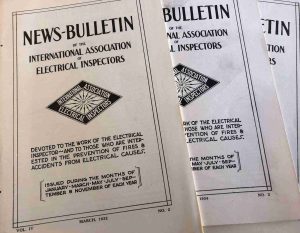
Thanks to the generous contribution from the collection of our Friend and colleague Mr. Joe Tedesco, we have received almost three decades of historical International Association of Electrical Inspectors – IAEI News Bulletins.
Beginning with the first edition published January 1929 through the 1950’s, Brainfiller had the privilege of scanning and are presently archiving this important collection with the permission (and encouragement) of the IAEI. The archiving is a work in progress and will continue until all of these historic documents are uploaded here.
By preserving this extensive historical collection and providing this archive, everyone can have insight about how far the electrical industry has evolved from before the Great Depression in 1929, through World War II and into the 1950’s.
Each article is uploaded as a flip book format meaning you can read it like an actual magazine on line. Review each description and simply click Continue Reading—–> to be taken to each edition.
There is much more in each issue than the highlighted articles. Some of it is a bit funny from our present day perspective. Happy Reading!
Reprinted with permission from “IAEI News” by the International Association of Electrical Inspectors (IAEI). Copyright © 1929 to 2020 by the International Association of Electrical Inspectors. Current articles may be found online at https://www.iaeimagazine.org.
From the archives, Did You Know:
In 1932, small air circuit breakers thermally actuated and approved by UL for services and branch circuits were celebrating their third year on the market with over 200,000 circuits using this new form of protection.
– IAEI News Bulletin – Volume IV No. 2 – March 1932
In 1947, a licensed electrician was required to install a television.
– IAEI News Bulletin, Part One – Volume XX No. 4 – September 1948
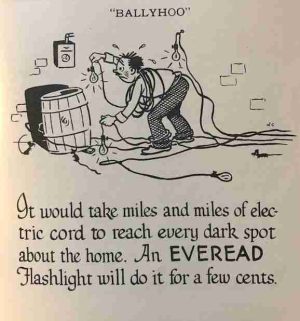
The cartoon is a bit of electrical humor from the January 1932 Edition of IAEI News-Bulletin.
Take a stroll through history – Enjoy!
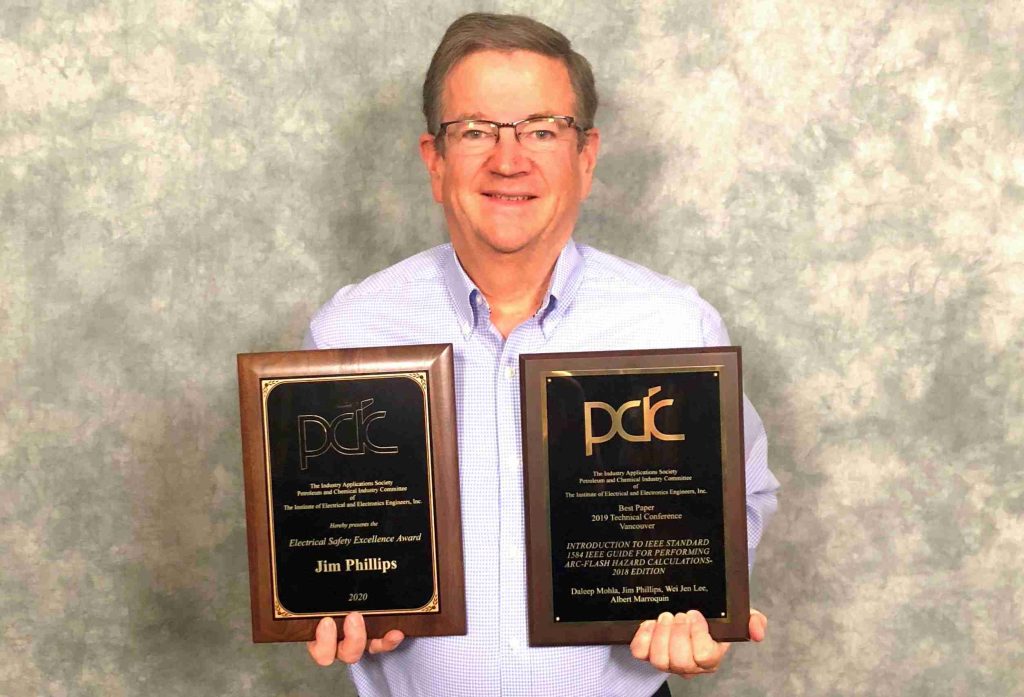
Jim is the International Chair of Geneva, Switzerland based International Electro-Technical Commission’s TC 78 for Live Working. He is also Vice-Chair of IEEE 1584, Technical Committee Member of NFPA 70E and active with many other standards organizations.
He continues to travel the globe typically flying over 150,000 miles a year to work with various U.S. and international standards organizations and speak at many conferences and training events.
Jim and his wife of over four decades live in Scottsdale, Arizona.
| Cookie | Duration | Description |
|---|---|---|
| cookielawinfo-checbox-analytics | 11 months | This cookie is set by GDPR Cookie Consent plugin. The cookie is used to store the user consent for the cookies in the category "Analytics". |
| cookielawinfo-checbox-functional | 11 months | The cookie is set by GDPR cookie consent to record the user consent for the cookies in the category "Functional". |
| cookielawinfo-checbox-others | 11 months | This cookie is set by GDPR Cookie Consent plugin. The cookie is used to store the user consent for the cookies in the category "Other. |
| cookielawinfo-checkbox-necessary | 11 months | This cookie is set by GDPR Cookie Consent plugin. The cookies is used to store the user consent for the cookies in the category "Necessary". |
| cookielawinfo-checkbox-performance | 11 months | This cookie is set by GDPR Cookie Consent plugin. The cookie is used to store the user consent for the cookies in the category "Performance". |
| viewed_cookie_policy | 11 months | The cookie is set by the GDPR Cookie Consent plugin and is used to store whether or not user has consented to the use of cookies. It does not store any personal data. |