Technical Articles

Technical Articles

NFPA 70E Arc Flash Labels

Why NFPA 70E Labels Aren’t Always Consistent

Question:Some arc-flash labels list the arc-flash boundary in inches, others in millimeters or meters, and some even show odd values like 3.4 feet. On top of that, IEEE 1584 uses joules per square centimeter (J/cm²), but PPE ratings are in calories per square centimeter (cal/cm²). Why is there so much inconsistency on NFPA 70E arc flash / equipment labels? Answer:It looks messy, but there’s a logical reason behind it. The short version is this: IEEE 1584 is based on metric

Read More »
Electrical Safety UK, Ltd.

Proud Partner of Electrical Safety UK, Ltd. Rotherham (Sheffield), England

For nearly two decades, I have been closely associated with the UK’s—and Europe’s—foremost authority on arc flash and electrical safety: Electrical Safety UK (ESUK). Based in Rotherham (Sheffield), England, ESUK has been at the forefront of advancing electrical safety practices for over twenty years. I have had the privilege of contributing to this journey from its early days and continue to serve on the company’s board. My association with ESUK began close to its inception, when its founder, Mr. Mike

Read More »
NFPA 70E 2 second arc duration

IEEE 1584, NFPA 70E and the “2-Second Arc Duration” Myth

IEEE 1584, NFPA 70E and the “2-Second Arc Duration” Myth Question:I’ve heard that an arc flash can’t last longer than two seconds. Is that true? Short answer:No! An arc flash can absolutely last longer than two seconds. Neither IEEE 1584 nor NFPA 70E says an arc flash is physically limited to two seconds. The two-second value is an assumption used for exposure time, not a limit on how long an arc can actually exist. This misunderstanding comes from a statement

Read More »

Arc-Flash Boundary and NFPA 70E — Is It a “Safe” Place to Stand?

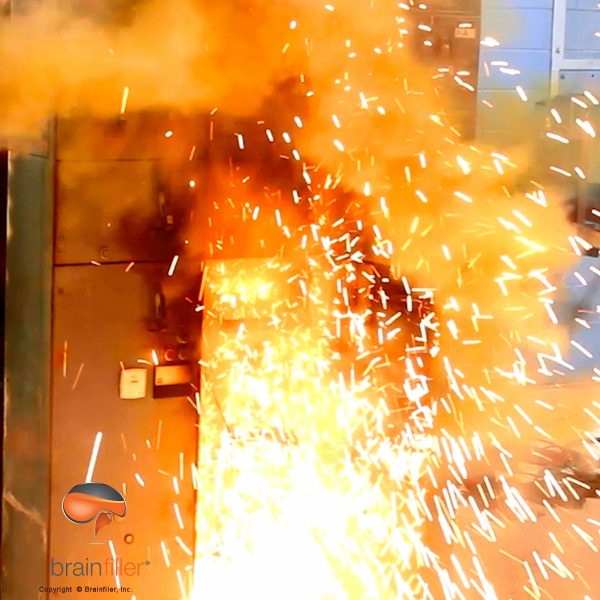
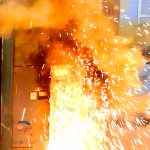
Question: Arc Flash Boundary – Safe? Since NFPA 70E does not require arc-flash PPE outside of the arc-flash boundary, does that mean it’s a safe place to stand? The Short Answer: I would not stand there – without some protection! – Really? Yes, but I have the advantage of seeing many staged arc flash events in the lab so I know what it can do.  What NFPA 70E Actually Says About the Arc-Flash Boundary Let’s start with the basics. NFPA

Read More »
IEEE 1584.2 Standard

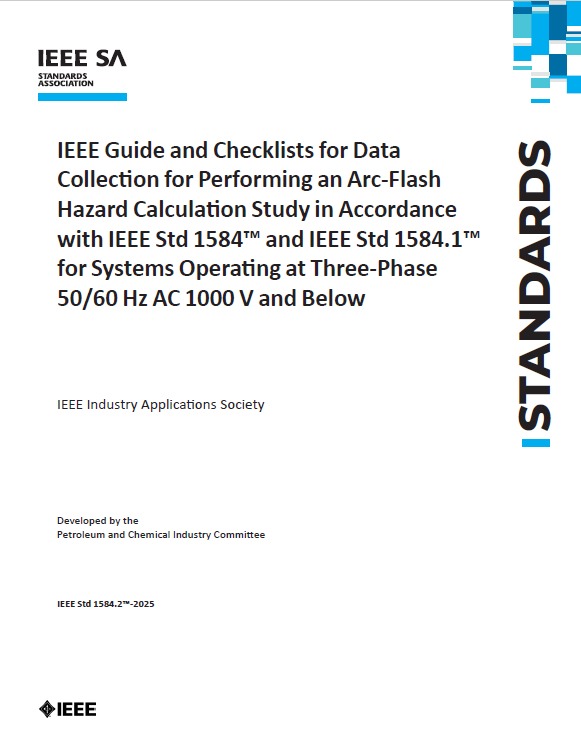
NEW! IEEE 1584.2 was Recently Published

IEEE 1584.2 was recently published! The full title is: IEEE Guide and Checklists for Data Collection for Performing an Arc-Flash Hazard Calculation Study in Accordance with IEEE Std 1584™ and IEEE Std 1584.1™ for Systems Operating at Three-Phase 50/60 Hz AC 1000 V and Below This newest addition to the IEEE 1584 family complements the existing standards: IEEE 1584 – 2018: IEEE Guide for Performing Arc-Flash Hazard Calculations IEEE 1584.1 – 2022: IEEE Guide for the Specification of Scope and

Read More »

Why Jim Phillips Is a Trusted NFPA 70E Expert

Electrical safety isn’t theory—it’s protection for people, equipment, and uptime. For more than 40 years, Jim Phillips has helped engineers, electricians, and safety professionals turn the NFPA 70E Standard for Electrical Safety in the Workplace into practical, actionable safeguards that reduce incidents and strengthen compliance. At Brainfiller, Jim leads some of the industry’s most trusted NFPA 70E training programs, known for converting complex standards into proven, field-ready procedures. What Is NFPA 70E and Why It Matters Developed by the National

Read More »
The 2022 Edition of IEEE 1584.1 was just published

Over Two Decades of IEEE 1584 Standards

No, the title doesn’t have a typo — “Standards” is plural for a reason. Over 20 years ago, in 2002, the original IEEE 1584 standard was released and changed the game for arc flash safety around the world. Since then,…

Read More »
Continuous thermal monitoring

NFPA 70E 205.4: The Power of Noncontact Diagnostics

NFPA 70E 205.4 and Noncontact Diagnostics If you’re in the electrical world, you’ve probably seen how fast technology is changing the way we maintain equipment. The 2024 edition of NFPA 70E is no exception—it reinforces the importance of keeping electrical…

Read More »