Technical Articles

Technical Articles

Absence of current

2027 NFPA 70E – Absence of CURRENT

NFPA 70E Hazard Elimination – Absence of Current NFPA 70E emphasizes hazard elimination as the first priority in the implementation of safety-related work practices. This requirement is normally met by establishing and verifying an electrically safe work condition (ESWC) in accordance with NFPA 70E 120.6. Step seven of this process requires determining the absence of voltage to confirm that a circuit is deenergized and safe to work on.  However, the 2027 edition recognizes absence of voltage may not be enough.  

Read More »

9.0 Earthquake | Fukushima | Arc Flash | and Me

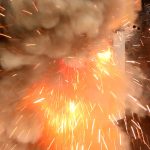
Fifteen years ago on March 11, 2011, a devastating earthquake struck Japan with a magnitude of 9.0. Little did I know at the time that I would become part of the international investigation team. Most people remember two things: the devastating tsunami and the disaster at the Fukushima Daiichi nuclear power plant. But there was another event that almost no one talks about—an arc flash at a different nuclear power plant. The Onagawa Nuclear Power Plant.  Wait… what? The massive earthquake

Read More »
Neutral Grounding Resistor

Impedance Grounding and Arc Flash

A short circuit happens when energized conductors accidentally make contact with each other and/or to ground. When that connection forms, the load and its impedance is bypassed resulting usually resulting in a very high magnitude of current. There are several fault types—three-phase, phase-to-phase, and line-to-ground, but the line-to-ground fault is by far the most common. You’ll often see numbers in the 70–80% of all faults falling into this category. Some say this number is even higher. Why so many line-to-ground

Read More »

When Horizontal Bus is NOT HCB

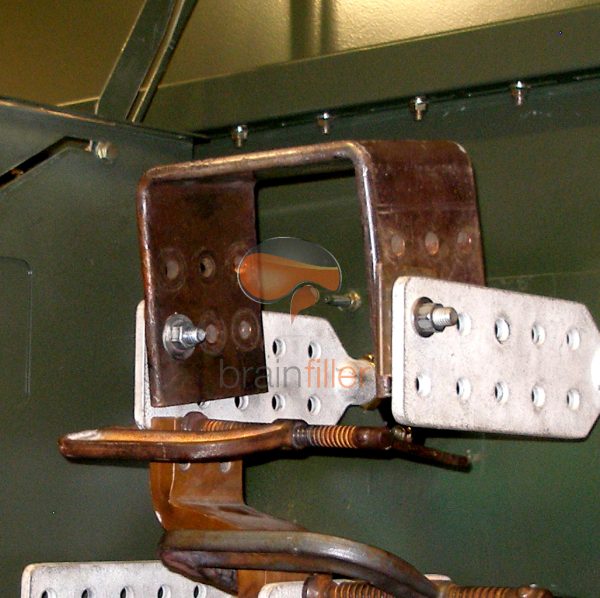
Question:I have a switchboard with horizontal bus. Should I use the HCB model? Short answer:Not necessarily. Wait! What? Horizontal might not be horizontal? NFPA 70E requires performing an arc flash risk assessment which usually means using IEEE 1584 equations via software to conduct an arc flash study. This requires the selection of what is known as the equipment electrode configuration. One of the most misunderstood configurations is HCB. Let’s clear up a common misunderstanding. HCB stands for Horizontal Conductors in

Read More »

Arcing Fault Current, NFPA 70E and IEEE 1584

IEEE 1584 defines arcing fault current as the reduced current that flows during an arc flash event, differing significantly from bolted fault current. Understanding this distinction is critical for accurate incident energy calculations, arc flash studies, and NFPA 70E compliance.

Read More »