English
  Spanish

NFPA 70E emphasizes hazard elimination as the first priority in the implementation of safety-related work practices. This requirement is normally met by establishing and verifying an electrically safe work condition (ESWC) in accordance with NFPA 70E 120.6. Step seven of this process requires determining the absence of voltage to confirm that a circuit is deenergized and safe to work on. However, the 2027 edition recognizes absence of voltage may not be enough.
From the NFPA 70E perspective, when a person is within the limited approach boundary or is interacting with equipment in a way that increases the likelihood of an arc-flash injury, circuits operating at 50 volts or greater must be placed into an electrically safe work condition before work is performed (a few exceptions exist). Equipment operating below 50 volts is normally considered a minimal risk. However, this assumption can be misleading.
Some circuits operate at voltages well below 50 volts and yet can still present a potentially serious hazard. This seems counterintuitive.
We typically think of electrical systems as having a fixed voltage — for example, 480V — with current varying based on the load. Under the fixed voltage model, no voltage means no current, and therefore no hazard.
In most cases, that’s true – but not all circuits behave that way.

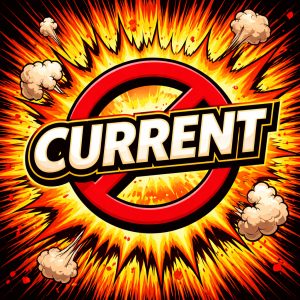
Some types of circuits function as a constant current source. In these cases, the current remains relatively steady while the voltage varies. For some current-driven circuits, the voltage can be quite low under normal conditions. This can challenge the traditional assumption that absence (or almost absence) of voltage equals safety. In other words, low voltage does not necessarily mean low risk.
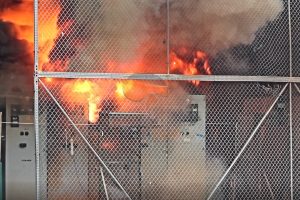
One example of a current driven circuit is airfield lighting. These series circuits are current regulated performing like a constant current source. Airfield lights work on low voltage from the secondary of an isolation transformer. A potentially significant hazard is created when the secondary of the isolation transformer is open circuited. This can occur when a light is removed or burns out, causing the transformer to produce a hazardous voltage to the lamp connection point. To determine that the circuit is de-energized a true RMS ammeter is used to test for absence of current. (See Federal Aviation Administration (FAA) Advisory Circular 150/5340-26C, Maintenance of Airport Visual Aid Facilities).
The 2027 NFPA 70E will now address this issue. While still in the final stages and not yet published as of this writing, the intent is clear: voltage alone may not always be sufficient to verify that a circuit is safe.
The 2024 Edition of NFPA 70E 120.6 Process for Establishing and Verifying an Electrically Safe Work Condition contains eight steps, with step seven being the test for absence of voltage.
The 2027 Edition will add a new exception to this step:
Exception No. 3 to 7: If testing for absence of voltage alone does not indicate that electrical conductors and equipment are deenergized, then additional methods of testing shall be required.
This new exception also has a new Informational Note to provide further guidance.
Informational Note to Exception No. 3: An example of additional methods include testing for the absence of current in current-driven circuits.
This language acknowledges that there are circuits where voltage alone may not be the best indicator of electrical hazards. Recognizing those situations — and verifying both voltage and current where appropriate — is a necessary step to eliminate the risk.
With a career beginning in 1981 and Brainfiller launching in 1987, Jim has built a global reputation as a trusted leader in electrical safety.
He currently:
💡 Did you know? Many NFPA 70E trainers learn the material by attending Jim’s classes—while Jim is involved directly with the standards they teach.


All training is available live, on-site, or on-demand, and includes completion certificates with CEU/PDH documentation.NFPA 70E Qualified Worker Training (8 hours)
Covers risk assessment, PPE, LOTO, establishing an electrically safe work condition, and auditing requirements.How to Perform an Arc-Flash Study | IEEE 1584 (16 hours)
Modeling, arcing current, incident energy, arc-flash boundaries, and system-level mitigation.Fundamentals of Electrical Safety (2 hours)
Shock hazards, arc-flash basics, and the building blocks behind NFPA 70E.DC Electrical Safety Fundamentals (2 hours)
Key safety practices for data centers and DC systems.
Train with Jim Phillips through Brainfiller.
Empower your team, strengthen compliance, and protect lives with industry-leading NFPA 70E and arc-flash training.


| Cookie | Duration | Description |
|---|---|---|
| cookielawinfo-checbox-analytics | 11 months | This cookie is set by GDPR Cookie Consent plugin. The cookie is used to store the user consent for the cookies in the category "Analytics". |
| cookielawinfo-checbox-functional | 11 months | The cookie is set by GDPR cookie consent to record the user consent for the cookies in the category "Functional". |
| cookielawinfo-checbox-others | 11 months | This cookie is set by GDPR Cookie Consent plugin. The cookie is used to store the user consent for the cookies in the category "Other. |
| cookielawinfo-checkbox-necessary | 11 months | This cookie is set by GDPR Cookie Consent plugin. The cookies is used to store the user consent for the cookies in the category "Necessary". |
| cookielawinfo-checkbox-performance | 11 months | This cookie is set by GDPR Cookie Consent plugin. The cookie is used to store the user consent for the cookies in the category "Performance". |
| viewed_cookie_policy | 11 months | The cookie is set by the GDPR Cookie Consent plugin and is used to store whether or not user has consented to the use of cookies. It does not store any personal data. |