Technical Articles

Arc Flash Forum Update

How far would you go?

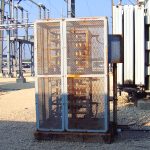
All – I found this installation the other day while in an area I am not officially in charge of. I called the person in charge and recommended he have it removed form service that day before something bad happened. Obviously that didn’t happen. If your electrician installed this would he still be working for you? How about his supervisor who did not have it removed? The other option would be I’m the crazy one and it’s no big deal.


Read More »

Falsified Arc Flash Study

As a electrical engineer who performs arc flash studies and investigates electrical accidents I have come across a company who is faking their arc flash studies. They go into companies and collect a little data such as the number of electrical panels then go back and print labels with made up numbers. I have proven that this particular study was totally fabricated. This false study resulted in three maintenance personnel being burned with two having very serious injuries. There is

Read More »

AF Boundary Marking

Hi, As per NFPA 70E, we have 3 boundaries to mark(AFB, limited and restricted). It is easy to mark and follow only one boundary which is greater than two. Sometimes AFB is more than limited approach boundary, so we marked the AFB and follow that. But sometimes AFB is very less for lighting boards and power distribution boards. Also it is not feasible to mark limited boundary as it is very big for small board placed in normal working area

Read More »

Short sleeves versus long sleeves

The industrial plant I work in has a policy that you must have long sleeves when inside an electrical room. Yesterday we had our annual “cold day”, where all turbine generators are offline and we are disconnected from the electric utility. During that period it is common practice for electricians to where short sleeves only. However, there doesn’t appear to be a facility policy to that effect, so someone made a fuss and we are having to clarify the policy.

Read More »

IEEE 1814 – Have you heard of it?

IEEE 1814 Recommended Practice for Electrical System Design Techniques to Improve Electrical Safety The overview of this standard is that the Recommended Practice will communicate “electrical safety by design” concepts and their benefits. Current standards and codes place minimum requirements on electrical system designers and manufacturers that yield functional, reasonably safe electrical installations. The final product of this working group will capture, in one location, a wealth of “electrical safety by design” concepts that have been published in recent IEEE

Read More »

Application range of methods in IEEE1584

Hello everyone, The application range for the empirical method is clearly defined : 208V to 15kV and a bolted fault current between 700A and 106kA. But for the theoretical method, what is the applicable bolted fault current range? Can it be used for any voltage? The position about the type of bolted fault current is also not clear. Is it only for 3-phase fault? Or 1-phase fault can be treated? How do you understand those? Do you use another standard

Read More »

Arc flash detection relay

What is the practice for the use of arc detection relay trip time in the arc incident energy calculations? NFPA-70E recognized arc detection relay but kept under “Other Methods” as opposed to “Incident Energy Reduction Method”. Does this means the arc flash relay tripping time should not be used for the arc incident energy calculations? READ MORE.

Read More »

IEEE 1584 Equations – Your Thoughts?

When an arc flash study is performed, most rely on software that is built around the equations from IEEE 1584. This week’s question focuses on performing arc flash calculations by hand – either as an exercise or for an actual analysis. What are your thoughts about the existing IEEE 1584 equations? Too complex / Too much detail Too simple / Not enough detail Seems to be OK as is. I’ve Never performed calculations manually Click to ANSWER

Read More »

NFPA 70E

AS I understand it in NFPA 70 E 130.7 table any Panel 240 volts and below require Category 1 PPE. Also NFPA says any voltage 120 volts Phase to Phase is not required. If so shouldn’t Residential Electricians also comply? REPLY

Read More »

Underrated/Over dutied panels in an old building…..WWYD?

We’ll call this a hypothetical question. Say you are running a short circuit and arc flash study on a 50 year old building as part of a multi-building study. You discover you have about a half dozen branch panelboards that are over-dutied in this building. These are all 225A rated, 208Y/120V. Some are flush in block walls in finished areas. Breakers in these panels are 50 year old, long discontinued 10KAIC rated. The feeders are all protected with FRN or

Read More »