English
 Spanish

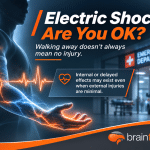
Electric Shock: You Walked Away. So You’re Okay?
Not necessarily!
One of the dangerous assumptions about electric shock is that if someone survives, walks away and appears fine, no serious injury occurred. But what about the injuries that aren’t immediately obvious?
Years ago, my son accidentally contacted 120 volts. His muscles locked, and he couldn’t let go. This was headed for a potentially tragic outcome. Fortunately, he remembered enough of Dad’s electrical safety discussions to fight his way free – some of those conversations actually stuck!
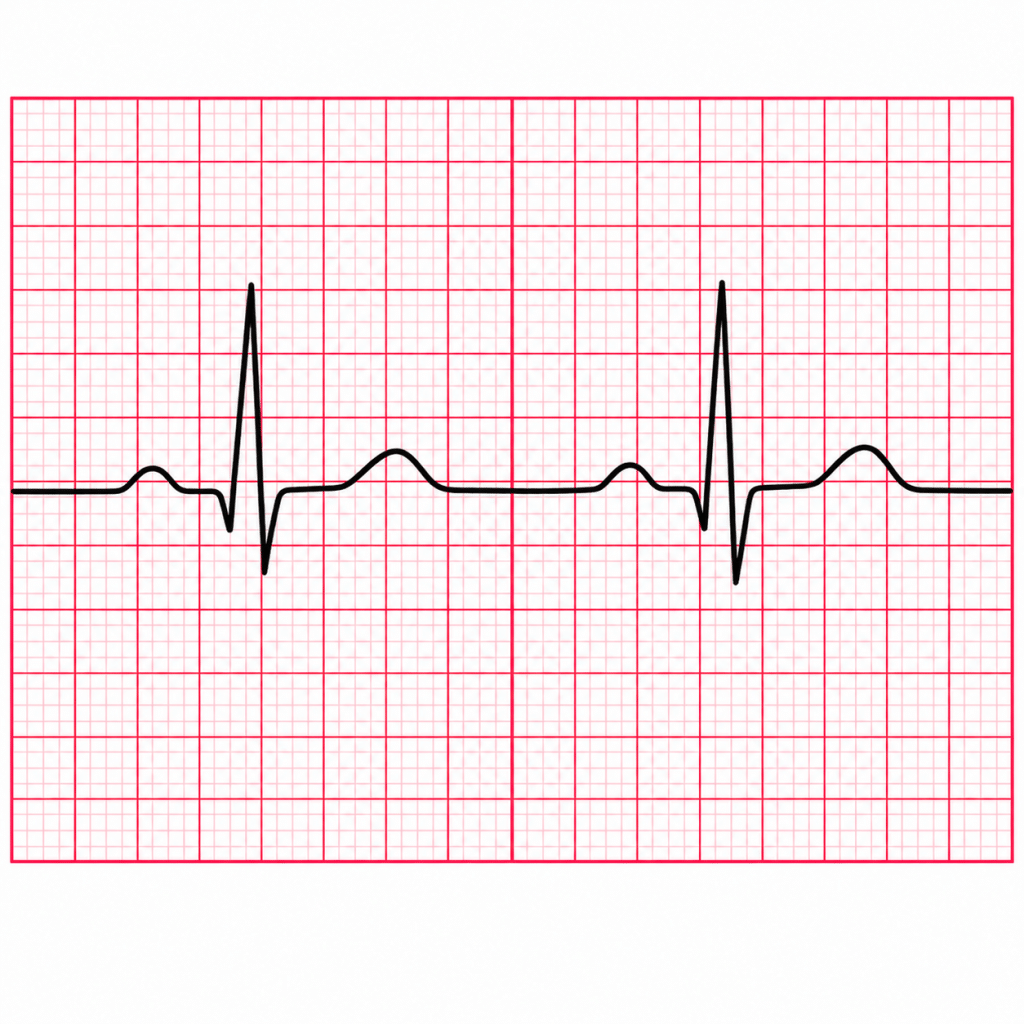
He suffered burns on his fingers, and I took him to the emergency department. His evaluation included blood tests to check for possible heart muscle injury as well as an electro-cardiogram (ECG). Thankfully, he was okay, although he experienced unusual heart rhythms for several weeks afterward.
That experience has stayed with me.
The 2027 edition of NFPA 70E includes a significantly expanded discussion of electric shock injuries in Informative Annex K.
Beyond burns and the immediate effects of electric current, the annex discusses electric shock sequelae. That’s the medical term for consequences that can persist or develop after an injury.
These effects can be neurological, psychological or physical. Some may not become apparent until well after the initial incident.
Electric current can also disrupt the body’s electrical signals, causing involuntary muscle contractions, respiratory paralysis and potentially fatal heart rhythm disturbances.
And here’s the part that deserves attention:
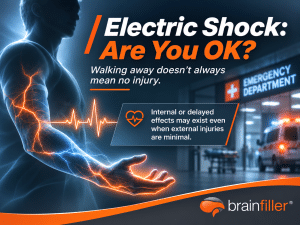
The absence of visible burns or immediate symptoms does not necessarily mean the absence of injury.
An electrical shock should never be casually dismissed. Appropriate medical evaluation depends on the circumstances, symptoms and potential severity of the exposure.
The bottom line?
Walking away from an electric shock doesn’t automatically mean walking away unharmed.
Sometimes the most serious consequences are the ones we can’t immediately see.
With a career beginning in 1981 and Brainfiller launching in 1987, Jim has built a global reputation as a trusted leader in electrical safety.
He currently:
💡 Did you know? Many NFPA 70E trainers learn the material by attending Jim’s classes—while Jim is involved directly with the standards they teach.


Jim’s background spans:
This progression gives Jim a rare, 360-degree view of electrical hazards—from theoretical models to real-world failures. His training incorporates both the engineering and the practical side of electrical safety.
As Vice-Chair of IEEE 1584, Jim has played a major role in shaping the methodology behind modern arc-flash hazard calculations—the backbone of NFPA 70E’s incident energy analysis and PPE selection.
His instruction includes:

In the early 2010s, NFPA 70E began shifting from a hazard-based approach to a risk-based methodology. Jim contributed to this evolution through published research and committee discussions. His early collaboration with a UK colleague helped introduce the risk-focused thinking now central to each new edition.
He continues to evaluate public input, technical proposals, and revisions each cycle—bringing real-world insight to the standard.
Engineers and electricians consistently give Jim five-star reviews for:
Many participants remark that Jim is the first person who has ever truly explained why a requirement exists—not just what it says.
⭐ Why choose Jim? When you train with Jim Phillips, you’re learning NFPA 70E from someone involved in shaping its direction—not from recycled slides.
Brainfiller offers several courses designed and taught by Jim, all targeted to engineers, electricians, and safety professionals.
NFPA 70E Qualified Worker Training (8 hours)
Covers risk assessment, PPE, LOTO, establishing an electrically safe work condition, and auditing requirements.
How to Perform an Arc-Flash Study | IEEE 1584 (16 hours)
Modeling, arcing current, incident energy, arc-flash boundaries, and system-level mitigation.
Fundamentals of Electrical Safety (2 hours)
Shock hazards, arc-flash basics, and the building blocks behind NFPA 70E.
DC Electrical Safety Fundamentals (2 hours)
Key safety practices for data centers and DC systems.
All training is available live, on-site, or on-demand, and includes completion certificates with CEU/PDH documentation.
Organizations that adopt Jim’s training consistently report:
Recent recognition includes:


Because Jim is embedded in NFPA, IEEE, IEC, and NEC committees, he sees emerging trends before they appear in the codebook.
His training materials are updated immediately after each standards cycle, keeping teams aligned with NFPA 70E, IEEE 1584, and OSHA expectations.
🔧 From code to craft: Jim explains why requirements exist and how to apply them correctly in real electrical systems.
Partnering with Jim Phillips ensures your team learns NFPA 70E and arc-flash safety from someone who has helped guide the direction of the standard—not from copied material.
Train with Jim Phillips through Brainfiller.
Empower your team, strengthen compliance, and protect lives with industry-leading NFPA 70E and arc-flash training.

| Cookie | Duration | Description |
|---|---|---|
| cookielawinfo-checbox-analytics | 11 months | This cookie is set by GDPR Cookie Consent plugin. The cookie is used to store the user consent for the cookies in the category "Analytics". |
| cookielawinfo-checbox-functional | 11 months | The cookie is set by GDPR cookie consent to record the user consent for the cookies in the category "Functional". |
| cookielawinfo-checbox-others | 11 months | This cookie is set by GDPR Cookie Consent plugin. The cookie is used to store the user consent for the cookies in the category "Other. |
| cookielawinfo-checkbox-necessary | 11 months | This cookie is set by GDPR Cookie Consent plugin. The cookies is used to store the user consent for the cookies in the category "Necessary". |
| cookielawinfo-checkbox-performance | 11 months | This cookie is set by GDPR Cookie Consent plugin. The cookie is used to store the user consent for the cookies in the category "Performance". |
| viewed_cookie_policy | 11 months | The cookie is set by the GDPR Cookie Consent plugin and is used to store whether or not user has consented to the use of cookies. It does not store any personal data. |