English
  Spanish

Question:
Can IEEE 1584 be used for higher voltages, such as 23 kV or 34.5 kV systems?
Short answer: No.
This is a very common questions I receive during my training about NFPA 70E Article 130.5 (Arc-Flash Risk Assessment) and IEEE 1584.
The IEEE 1584-2018 equations for incident energy, arc-flash boundary, and arcing current are only validated for systems from 208 V through 15 kV. Once you go above 15 kV, IEEE 1584 is outside its range of validity and should not be used to calculate incident energy if you want to remain technically defensible when conducting an arc flash risk assessment in accordance with NFPA 70E Article 130.5.
NFPA 70E Arc-Flash PPE Selection Options
NFPA 70E Article 130.5 allows two methods for selecting arc-flash PPE:
This method selects PPE based on:
The maximum equipment voltage covered by the PPE Category method is 15 kV.
Historically, this approach dates back to the 2000 edition of NFPA 70E, which pre-dated IEEE 1584 (first published in 2002). At that time, PPE selection methods were limited, and the category tables (originally known as Hazard Risk Category Tables) filled the gap.
This method is used to calculate incident energy at a defined working distance and is generally considered the preferred approach (and yes, that’s my personal opinion).
However, there’s a catch:
IEEE 1584 is only valid up to 15 kV, so its equations cannot be used for higher-voltage systems.
So… What Does NFPA 70E Require Above 15 kV?
This is where things get interesting.
NFPA 70E does not mandate a specific calculation method for incident energy. It requires that an arc-flash risk assessment be performed—but it stops short of naming IEEE 1584.
Many people assume the use of IEEE 1584 is required. It isn’t.
However, since its introduction in 2002, IEEE 1584 has become the globally accepted standard for arc-flash studies worldwide, which is why I do so much international travel – speaking at international conferences and teaching IEEE 1584 and NFPA 70E across the globe.
But once you exceed 15 kV, you’re officially outside the IEEE 1584 sandbox.
So what do you do then?
Why IEEE 1584 Does Not Apply Above 15 kV
IEEE 1584 is an empirically derived model based on extensive laboratory testing.
What About the Lee Method?
The 2002 edition of IEEE 1584 referenced theoretical methods for voltages above 15 kV. This was often interpreted as permission to use the Lee method.
The 2018 revision removed this language entirely. IEEE no longer references alternative calculation methods for higher voltages.
The Lee method still exists, but it is generally considered very conservative, especially at medium- and high-voltage levels.
Options for Systems Above 15 kV
Once you’re above 15 kV, you need to move beyond “standard” IEEE 1584 approaches.
Some commercial tools are specifically designed for medium- and high-voltage systems, including:
These alternative models better suited for higher voltages.
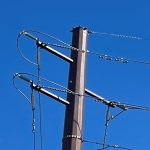
For utility and electric supply systems, IEEE C2 — the National Electrical Safety Code (NESC) may be used.
NESC includes tables for PPE arc ratings based on:
⚠️ A key limitation:
Many NESC tables and alternative calculation methods are based on phase-to-ground arc flash, not three-phase arc flash like IEEE 1584.
For transmission and distribution systems, phase spacing often makes it unlikely that a single-phase arc will escalate into a three-phase event.
3. DGUV 203-277 – Thermal Hazards Due to Electric Fault Arcing
DGUV 203-277 is a German guide applicable to systems up to 110 kV and is commonly used for arc flash hazard evaluation in conjunction with PPE tested under the IEC box test method (IEC 61482-1-2). Unlike the ASTM F1959 method, which provides an arc rating in cal/cm² (e.g., 8 cal/cm²), the IEC method assigns an Arc Protection Class (APC), which differs significantly from traditional arc ratings.
Key Takeaways for NFPA 70E Arc-Flash Risk Assessment
With a career beginning in 1981 and launching Brainfiller in 1987, Jim has built a global reputation as a trusted leader in electrical safety.
He currently:
💡 Did you know? Many NFPA 70E trainers learn the material by attending Jim’s classes—while Jim is involved directly with the standards they teach.


All training is available live, on-site, or on-demand, and includes completion certificates with CEU/PDH documentation.NFPA 70E Qualified Worker Training (8 hours)
Covers risk assessment, PPE, LOTO, establishing an electrically safe work condition, and auditing requirements.How to Perform an Arc-Flash Study | IEEE 1584 (16 hours)
Modeling, arcing current, incident energy, arc-flash boundaries, and system-level mitigation.Fundamentals of Electrical Safety (2 hours)
Shock hazards, arc-flash basics, and the building blocks behind NFPA 70E.DC Electrical Safety Fundamentals (2 hours)
Key safety practices for data centers and DC systems.


| Cookie | Duration | Description |
|---|---|---|
| cookielawinfo-checbox-analytics | 11 months | This cookie is set by GDPR Cookie Consent plugin. The cookie is used to store the user consent for the cookies in the category "Analytics". |
| cookielawinfo-checbox-functional | 11 months | The cookie is set by GDPR cookie consent to record the user consent for the cookies in the category "Functional". |
| cookielawinfo-checbox-others | 11 months | This cookie is set by GDPR Cookie Consent plugin. The cookie is used to store the user consent for the cookies in the category "Other. |
| cookielawinfo-checkbox-necessary | 11 months | This cookie is set by GDPR Cookie Consent plugin. The cookies is used to store the user consent for the cookies in the category "Necessary". |
| cookielawinfo-checkbox-performance | 11 months | This cookie is set by GDPR Cookie Consent plugin. The cookie is used to store the user consent for the cookies in the category "Performance". |
| viewed_cookie_policy | 11 months | The cookie is set by the GDPR Cookie Consent plugin and is used to store whether or not user has consented to the use of cookies. It does not store any personal data. |